Video by Adobe for Business via YouTube How do you scale personalization without sacrificing the customer experience? In this exclusive conversation, Katie Martell sits down with Anish Raul from Sling TV, a 2026 Adobe Experience Maker Awards finalist, to explore how the streaming service is transforming customer journeys with Adobe, AI, and experimentation. Learn how … Read more
Video by The AI Business Mindset via YouTube Unlock High-Income AI Skills Using Just Your Smartphone! (No Coding Required) Discover 6 practical, beginner-friendly AI skills you can start learning today with the device right in your hand. Whether you want to launch a freelance business or add a new revenue stream, this video breaks down … Read more
ஒரு பங்கின் அல்லது சந்தையின் விலை அதன் உண்மையான மதிப்பை விட அதிகமாக உயரும்போது Market Bubble உருவாகலாம்.
இந்த YouTube Short-ல்:
🔹 Stock Market Bubble என்றால் என்ன?
🔹 Bubble எப்படி உருவாகிறது?
🔹 அதிகமான விலை ஏன் ஆபத்தானது?
🔹 Bubble Burst ஆனால் என்ன நடக்கும்?
🔹 Investors கவனிக்க வேண்டிய முக்கிய விஷயங்கள் என்ன?
📊 Stock Market & Investment பற்றி எளிமையாக தெரிந்துகொள்ள இந்த Short-ஐ பாருங்கள்!
💬 உங்கள் கருத்துப்படி தற்போது எந்த market/sector-ல் Bubble இருக்கிறதா? Comment செய்யுங்கள்.
Disclaimer: இந்த வீடியோ கல்வி மற்றும் தகவல் நோக்கத்திற்காக மட்டுமே. இது முதலீட்டு ஆலோசனை அல்ல.
Buying land can feel like a huge step and it’s completely normal to want to wait for the "right moment." But ukumbuke wahenga walisema, “𝐓𝐡𝐞 𝐛𝐞𝐬𝐭 𝐭𝐢𝐦𝐞 𝐭𝐨 𝐛𝐮𝐲 𝐥𝐚𝐧𝐝 𝐰𝐚𝐬 𝟏𝟎 𝐲𝐞𝐚𝐫𝐬 𝐚𝐠𝐨 𝐚𝐧𝐝 𝐭𝐡𝐞 𝐬𝐞𝐜𝐨𝐧𝐝 𝐛𝐞𝐬𝐭 𝐭𝐢𝐦𝐞 𝐢𝐬 𝐍𝐎𝐖.”
You don’t have to figure it all out alone. We are here to walk with you all through your investment journey.
Book a FREE site visit today to get started. 𝑀𝑎𝑝𝑒𝑚𝑎 𝑛𝑑𝑖𝑜 𝑏𝑒𝑠𝑡!
📲 SMS "PLOT" to 20321 or call/WhatsApp 0725 000 222
🌐usernameproperties.com #UsernameProperties #UsernameDelivers #ATraditionOfTrust
Are you stuck in the 7 out of 10 zone? This is the most dangerous place to be because life is just good enough to keep you trapped.
Most people spend their entire lives in the 7 out of 10 zone, where things are not failing but are clearly not thriving. Whether it is a business that pays the bills but lacks passion, a relationship that is stable but unfulfilling, or investments drained by hidden fees, this level of comfort often prevents real progress. This video explains why accepting mediocrity is a silent risk to your long-term success.
Learning to identify the mediocrity trap is the first step toward reclaiming your time and potential. We break down why the 7 out of 10 zone feels safe and how to objectively audit the areas of your life that have stopped growing. By recognizing when you are simply settling in life, you can make the necessary changes to pursue higher standards instead of staying comfortable.
If you found this helpful, subscribe for weekly personal development breakdowns. Comment below: what is one area of your life that feels stuck at a 7?
———————————————————
WHO IS KIANA DANIAL?
My dad lost everything in the 1979 Iranian Revolution. A Wall Street boss told me I’d never be an analyst. I became one anyway, built my portfolio from $500 to $18M, and retired my husband from his corporate job using Triple Compounding™.
👉 Get your personalized Triple Compounding Roadmap: https://www.triplecompounding.com/roadmap-yt
WSJ bestselling author | Former Wall Street analyst | Electrical engineer
❗NORTHMIN HAS NOT PAID FOR THIS VIDEO. Terrahutton doesn’t only make the invisible, investable, they also sponsored this video, making it free of YouTube ads: https://www.terrahutton.io/.
By consuming this content, you acknowledge that Resource Talks and/or its affiliates and/or their personnel may have a conflict of interest as they may own, have owned, or will own interests in and/or may have a business relationship with some or all companies/entities mentioned/featured in this publication.
In general, viewers, listeners, and readers are encouraged to understand that this YouTube channel is a business that aims to receive compensation for the creation & publication of content. Viewers, listeners, and readers should should always assume there is a conflict of interest, as well biases. Viewers, listeners, and readers cannot and should not rely on anything said herein and are encouraged to conduct their own research as seek professional help.
The information provided herein is general & impersonal in nature and meant for entertainment purposes only. Viewers, listeners, and readers acknowledge and agree that the information presented herein does not constitute a solicitation of an offer to buy or sell any security or instrument or to participate in any trading strategy. Resource Talks and all parties involved in the management of the business strictly disclaim any and all liability for losses and/or damages, whether direct, indirect, special, or consequential, or other consequences, howsoever caused, arising out of any use or reproduction of the content published by Resource Talks, or any decision made or action taken in reliance upon it.
By consuming this content, all consumers vow to release Resource Talks and all parties involved in the management of the business from all claims, proceedings, or consequences.
Nobody involved in the production of this publication is a licensed investment advisor.
The views and opinions expressed in this interview are those of the guest and do not represent the views of Resource Talks and/or its affiliates and/or their personnel.
No recommendations are being made to buy or sell any securities in this video.
The mining and exploration space is highly likely to lose you money. Failure is the norm and should be the expectation. Don’t risk what you can’t afford to lose. If you don’t understand it, don’t do it.
The minimum risk on anything mentioned in this publication is 100% loss of capital.
Read official company filings on www.SedarPlus.ca.
Timestamps:
00:00:00 Chapters
00:00:15 Very Important Warning
00:01:06 NorthMin Company Overview
00:05:03 Build or sell?
00:12:16 Is this the right CEO for Beyond Metals?
00:17:22 Does management have real skin in the game?
00:19:52 Is any cheap paper still outstanding?
00:20:45 Who owns the rest of the stock?
00:21:26 Does the family hold a project royalty?
00:22:31 What are the change of control fees?
00:23:55 How is the CEO’s pay structured?
00:25:13 What stopped the previous operators from continuing?
00:32:49 How did NorthMin get this asset?
00:34:04 Was metallurgy ever a challenge ?
00:37:46 Are there environmental liabilities from the past?
00:40:56 Is more soil and water work needed?
00:42:57 Do the power station and galvanisers constrain NorthMin?
00:44:45 Which comes first, tailings or copper?
00:46:41 What are the immediate next steps?
00:47:56 What are the biggest unknowns here?
00:50:57 How much copper strike has NorthMin verified?
00:56:25 Where will NorthMin drill first, and when?
00:58:09 What would count as drilling success?
01:00:46 Is there a real-life analogue for this?
01:04:01 What is the long-term size potential?
01:08:36 What if the copper doesn’t work out?
01:09:22 How much will the first phase cost?
01:11:15 How much money does NorthMin have left?
01:11:26 When is the financing’s free trading date?
01:11:33 What news comes before that free trading date?
01:12:24 What long-term risk worries the CEO most?
01:13:38 Does Ireland as a jurisdiction worry him?
01:14:58 Is dredging the tailings ponds geotechnically risky?
01:17:40 How hard is working on the tailings?
01:19:00 What will NorthMin do with other licences?
01:21:46 Will NorthMin spend money on marketing?
01:23:06 What’s the biggest criticism of NorthMin?
01:25:28 Which other Irish companies is the CEO watching?
01:27:20 Catalyst Calendar
01:30:38 Very Important Warning – DO NOT SKIP
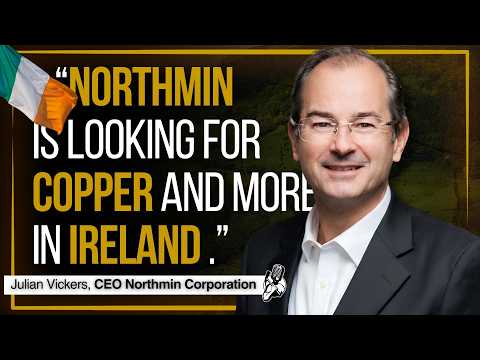
This is a NorthMin Interview with CEO, Julian Vickers.
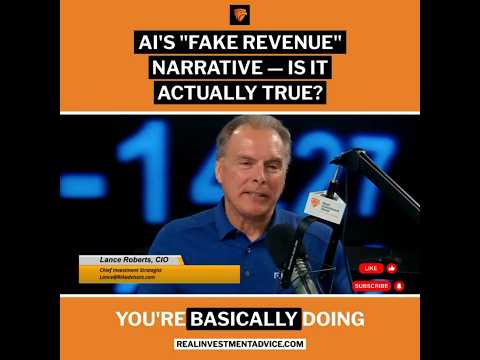
One of the biggest bearish arguments surrounding the AI boom is that much of the industry’s growth is fueled by circular financing (mainly by $NVDA): AI companies invest in customers or partners who then spend that money on AI infrastructure, effectively creating "fake" revenue.
But how much of that narrative is actually true?
Yes, some circular financing exists. But this isn’t a new phenomenon. Similar arrangements have existed for decades, from Ford and GM financing customers through their own credit arms to vendor financing during the late-1990s telecom boom.
The more important question is scale.
The argument here is that circular financing represents only a relatively small portion of the overall AI ecosystem. Meanwhile, the companies driving the biggest infrastructure investments are some of the most profitable and cash-rich businesses in the world.
$MSFT, $GOOGL and $AMZN aren’t dependent on AI investments to generate their underlying cash flow. Roughly 83% of the revenue comes from sources outside AI, supported by enormous existing businesses in cloud computing, advertising, software, e-commerce and other services.
Take #MSFT: the company generated roughly $90 billion in revenue, including $59.3 billion from cloud, while producing $40.6 billion in operating income at a 45% operating margin.
#GOOGL investment gains from Anthropic have also attracted criticism, with bears arguing that these one-time gains inflate the apparent profitability of the AI boom. But stripping out investment gains doesn’t eliminate Google’s core earnings engine.
That’s the key distinction: investment gains and circular financing exist, but they shouldn’t be confused with operating income generated by the underlying businesses.
The "fake revenue" thesis becomes much harder to defend when Microsoft, Google, Amazon, and other AI infrastructure leaders are still generating massive operating profits and cash flows independently of those investments.
Circular financing is worth watching. But saying that AI earnings are largely fake because of it is a very different claim — and the underlying financial statements don’t appear to support that conclusion.
Please ❤️like, bookmark🔖, and 🔁share with fellow investors